

Note – this article is not a replacement for therapy or other psychological support. If you are struggling with your mental health please speak to your doctor, or an organisation such as Mind.
Being able to manage our emotions is a key skill for succeeding in work and life. Our ability to manage the spectrum of emotions we experience can make a big difference to not only us, but if we’re in leadership roles, our teams, too. The great thing is emotion regulation can be learned.
In this article, we’ll explore:
- What emotion regulation is
- The difference between emotions and feelings
- Why emotion regulation is important
- Three strategies to help you manage your emotions
What is emotion regulation?
Emotion regulation is simply the process of managing our emotions so that we remain balanced and can respond effectively to situations. It can be a conscious thing. For example, telling yourself to keep calm before delivering a presentation to important people. It can also be unconscious, such as taking a deep breath of relief when the presentation is over!
The link with emotional intelligence
“Emotional intelligence isn’t about suppressing emotions; it is about understanding them, working through them, learning from them and ensuring that our emotions do not unfairly impact others around us.” Nancy Doyle
Managing our emotions is a key part of emotional intelligence. We need the following:
- Emotional self-awareness – the ability to recognise our emotions and the effects they have on us and others.
- Emotional self-control – the ability to keep disruptive emotions and impulses in check.
Three modes of emotion regulation
In psychology, we know there are three systems of emotion regulation. Let’s look at each of these in turn:
- The focus on feelings of threat and self-protection. As humans, we spend most of our time here – even when a threat is long past. This is because of negativity bias – we tend to pay more attention to and remember negative events than positive – and there are some suggestions there are evolutionary reasons for this. Typical emotions experienced here include anger, anxiety, and disgust.
- The focus on achievement and gaining resources. Here, we take pleasure in things such as getting more money, progressing in our careers, or meeting a romantic partner. Because we feel stimulated and activated in this mode, we tend to experience emotions such as joy, fun, excitement, and pleasure. We need to keep an eye on becoming over-stimulated and over-activated.
- The focus here is on affiliation, caring, and compassion. Here, we give or receive comfort and care. We tend to feel calm, safe, peaceful and experience emotions such as contentment.
The difference between emotions and feelings
“We now know that emotions provide an important and often sensitive and reliable compass with which to judge whether we should move towards or away from some course of action and also how to assess the appropriateness of our choices and aspirations. They are an important source of feedback about the external world.” Maureen O’Hara & Graham Leicester
Emotions: These are our automatic, unconscious reactions to situations and stimuli. Emotions can impact our body, and we can experience conflicting emotions. For example, we can be afraid of our own anger, or angry at ourselves for being anxious. Emotions consist of three things – what we think, how we feel, and how we behave.
Feelings: These are our conscious experience of emotional reactions. These tend to be subjective, influenced by our beliefs and experiences.
Here are some examples:
| Emotion | Feeling |
| Sad | Lonely, needy, unlovable |
| Joy | Lovable, happy, delighted |
| Anger | Resentful, disgusted, jealous |
| Love | Tolerant, kind, grateful |
| Fear | Nervous, stressed, confused |
| Peace | Relaxed, calm, content |
The wheel of emotions
Having words and ways to describe our emotions is important as it can help us describe our experiences. It’s important to note, that there are some people who may struggle to recognise and name emotions (a condition known as alexithymia). For those who don’t have that condition, we need to pay attention to what we’re emphasising.
For example, one study involving almost 40,000 people found that those who used a wide variety of negative emotion words tended to display markers associated with lower wellbeing. Those who used a wide variety of positive emotion words tended to display linguistic markers suggesting higher levels of wellbeing.
Perhaps the most well-known conceptualisation of emotions and associated words is Plutchik’s Wheel of Emotions. Psychologist, Robert Plutchik, suggests there are eight core emotions which work as four corresponding pairs:
- Joy and its opposite, sadness
- Trust and its opposite, disgust
- Fear and its opposite, anger
- Surprise and its opposite, anticipation

Image: Wikimedia Commons
Plutchik’s wheel shows different intensities of these emotions based on the words used. The closer the word is to the centre of the wheel, the higher the intensity of the emotion.
Why emotion regulation is important
Emotion regulation supports our health and wellbeing
Regulating our emotions isn’t about avoiding them. In fact, some suggest that avoiding our feelings and emotions – whether positive or negative – may contribute to health issues. Another study found that self-belief in one’s ability to manage negative emotions was an important resource in helping to manage job-related stress.
Emotion regulation helps us to be better leaders
“How can you manage others when you have difficulties managing yourself?” Tomas Chamorro-Premuzic
We already know that managers who can read emotions in others effectively are better able to manage team performance. But reading emotions is one thing, regulating them another. And as Richard E Boyatzis reminds us, “Leaders often have power and social status to be more infectious and spread contagion faster than others.”
Regulating emotions in ourselves and in our teams can also boost creativity and innovation – an important factor that helps companies remain competitive and efficient. In one study, researchers made the point that team innovation is a social process impacted by relationships and emotions. Therefore, it makes sense to hire leaders who can regulate their emotions effectively.
Emotion regulation helps us handle challenges better
Using your emotions in a focused way can help you make sense of things. For example, research suggests that when we assess failure of project, we’re more likely to learn and try a different approach next time when we tap into our emotions. When we use a logical, analytical approach, we’re more likely to justify ourselves rather than learning from the failure.
3 strategies for regulating your emotions
STRATEGY 1 – Cognitive reappraisal
“When we can identify the reason behind a strong emotion, we are better able to see where our control lies.” Hazel Anderson-Turner
Cognitive reappraisal encourages us to reflect on a situation from different perspectives. There are three aspects to cognitive reappraisal:
- Perspective taking: Looking at difficulties or other situations from various points of view, including other people.
- Challenging interpretations: Recognising the thought distortions, e.g. catastrophising and all-or-nothing thinking, that usually underlie problematic automatic responses to an experience. Ask yourself, “what is the evidence for my belief?”
- Reframing meaning: Looking at an experience from other possible angles.
A new study, published in the Journal of Occupational and Organizational Psychology, found cognitive reappraisal significantly helped reduce participants negative emotions and increased positive feelings and emotions. Cognitive reappraisal also appeared to help reduce counterproductive work behaviour, such as hiding information, bullying, or calling in sick when not. The study found that cognitive reappraisal of a situation had a particularly powerful effect.
Another study asked people in the experimental group to write about a difficult event from that day and use cognitive reappraisal to reflect on it differently. After six weeks, those in the experimental group were better able to regulate their emotions, reported lower levels of psychological distress, higher levels of life satisfaction, and higher levels of wellbeing. The researchers suggest that daily reflective practice using cognitive reappraisal may help people cope better with stressors before they lead to more serious mental health issues.
If you want to try cognitive reappraisal, here are three frameworks that might help:
- ABC model for reframing – DOWNLOAD SKETCHNOTE SUMMARY
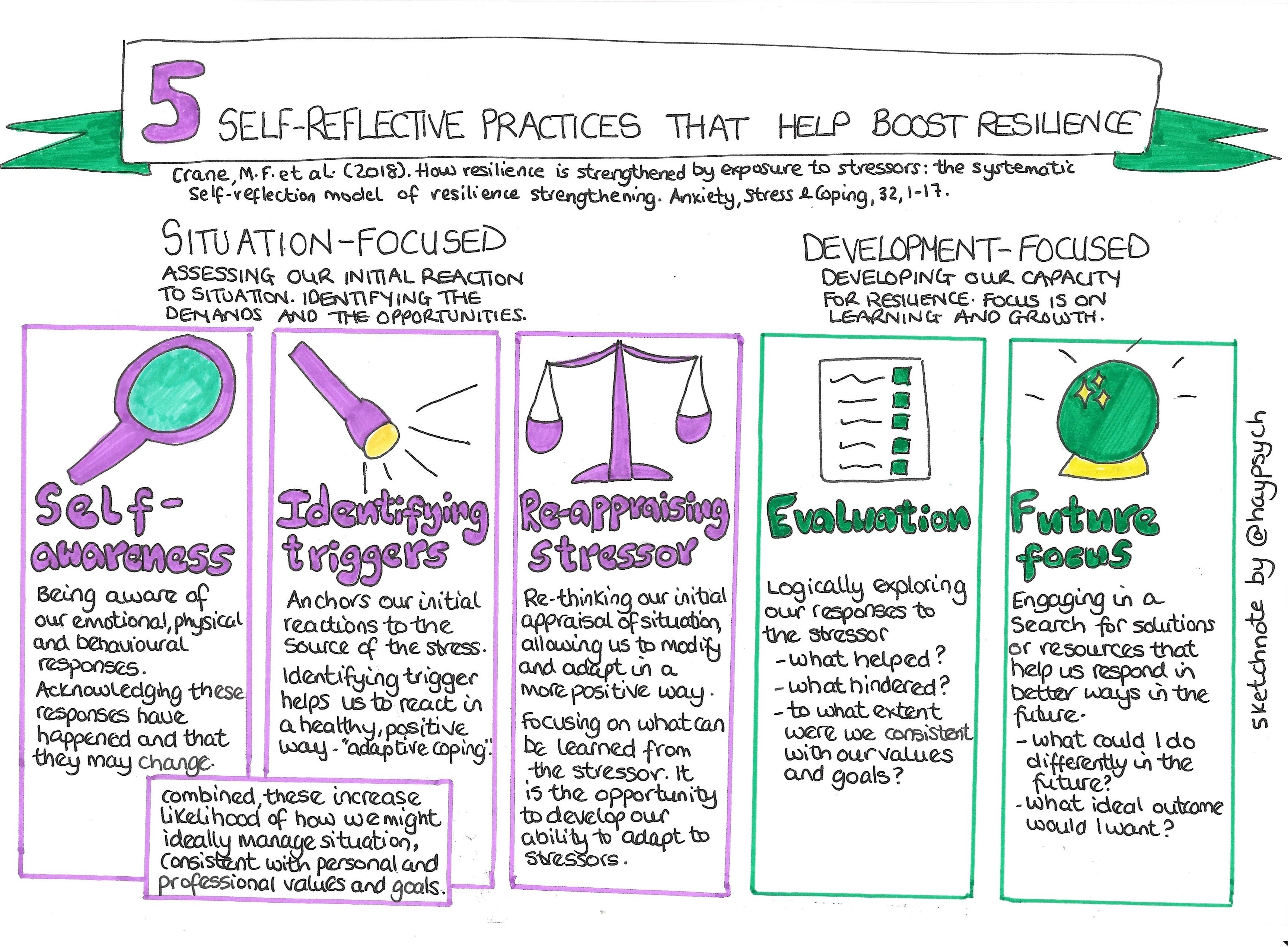
- Self-reflection to support resilience – DOWNLOAD SKETCHNOTE SUMMARY
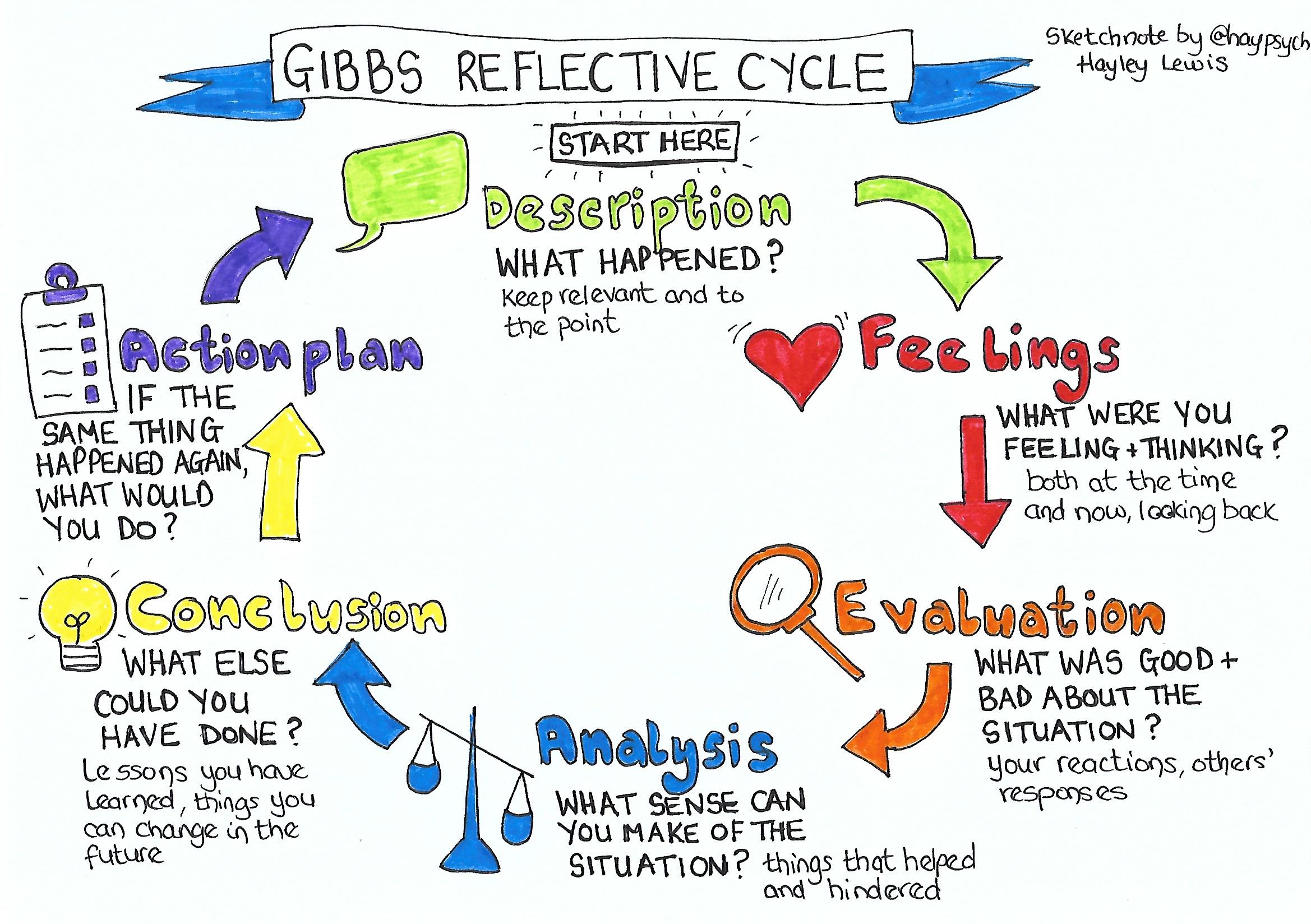
- Gibbs reflective cycle – DOWNLOAD SKETCHNOTE SUMMARY

STRATEGY 2 – Mindfulness
“Anger can give a certain degree of heroic energy, but it also destroys perspective because an angry person cannot think clearly.” Jenny Rogers
Remember how, earlier, we talked about the three modes of emotion regulation, and the human tendency to be in the threat response mode? Studies suggest that mindfulness may help balance this and reduce an unnecessary stay in this mode by putting us in ‘being mode’ rather than ‘doing mode’.
Mindfulness meditation not only seems to help people deal with physical pain and negative emotions but it can help balance our sympathetic-parasympathetic systems, thereby slowing our breathing, our heart rate, cortisol (stress hormone) etc.
Daily meditation may help to regulate emotions, giving us the calmness to simply observe our negative emotions and accept them. In turn, helping us to be more resilient in the face of uncomfortable emotions, processing them more objectively.
If you want to try mindfulness, here are three approaches that might help:
- Deep breathing in the moment, using something like Box Breathing This takes approximately one minute.
- Daily 5, 10, or 15-minute meditation practice using an app such as Headspace or Calm. Or simply switch your phone to airplane mode and set the timer. Close your eyes and focus on your breathing until your alarm goes off.
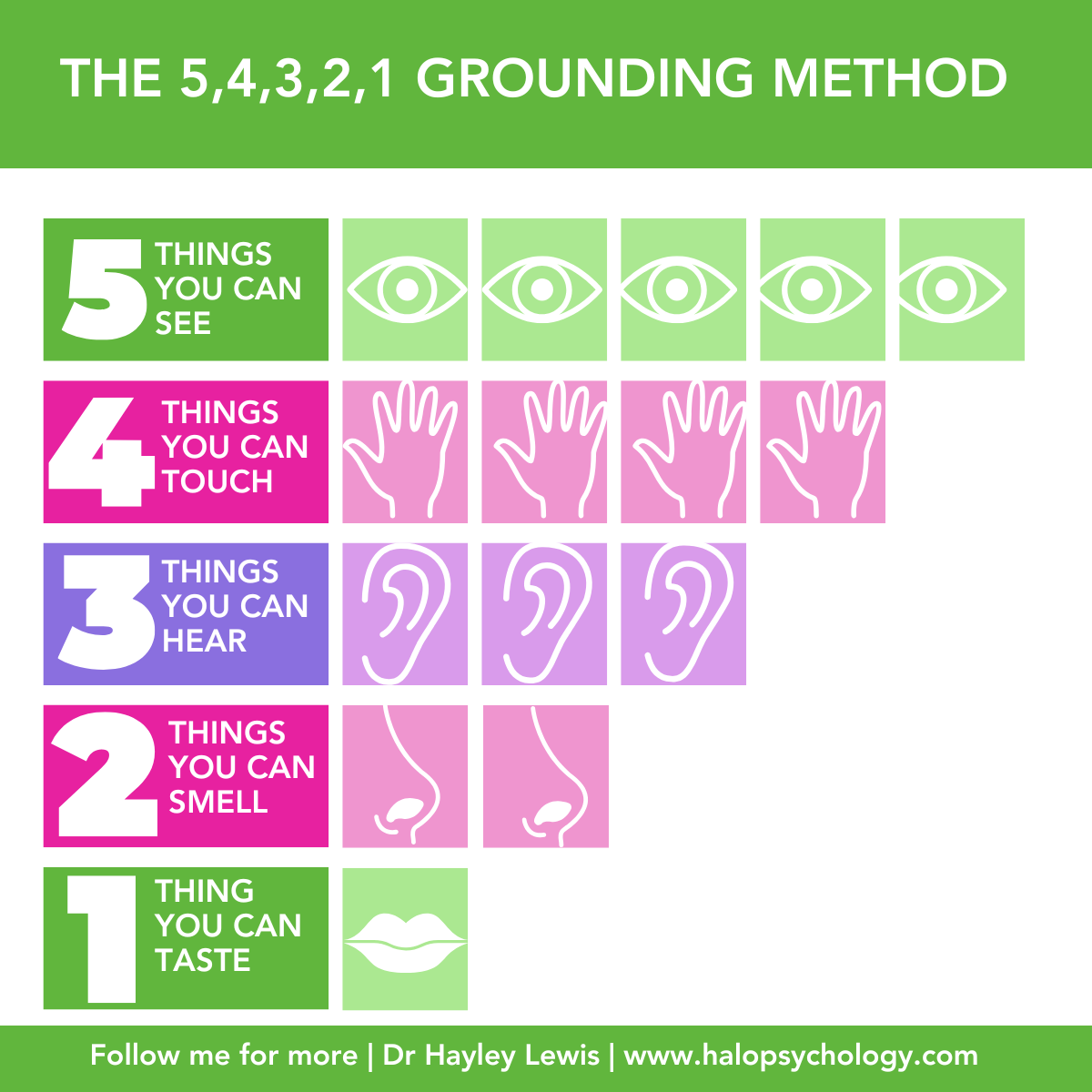
- The 5,4,3,2,1 grounding method – DOWNLOAD INFOGRAPHIC HERE

STRATEGY 3 – Notice it, name it
Affect Labelling is a psychological concept which essentially means, putting our feelings and emotions into words. If we can name and describe the emotion we’re experiencing, and what’s causing it, we can reduce its hold and impact on us.
And it’s not just about the words we use for ourselves, when managing emotions. What we say to others may help or hinder them in regulating their emotions. Instead of telling someone who is upset or angry, “don’t take it so hard” or “don’t be upset”, encourage them to name their thoughts and feelings. This helps them to own their own reactions and why they might feel a certain way. Don’t diminish other’s emotions. Help them notice, name and process them.
When we notice and name our emotions, we can be more intentional about the steps to take next. For example, we can decide to increase or decrease our emotional response, and we can decide whether to tap into positive or negative emotions.
Here are three approaches that might help:
- Print off Plutchik’s Wheel of Emotions and refer this to find the right word that describes your emotion. DOWNLOAD THE IMAGE
- The ARC model for understanding emotions – DOWNLOAD SKETCHNOTE SUMMARY
- Emotion regulation framework – DOWNLOAD SKETCHNOTE HERE


Post author: Dr Hayley Lewis. First published on the HALO Psychology website 9 June 2025
Did you find this post helpful? I’d love to know, either pop a comment below or drop me a note on LinkedIn. If you have any colleagues that you feel should read this, too, please share it with them. I’d really appreciate it.
I also have a monthly newsletter which is a compilation of blog posts, helpful research, and reviews of books and podcasts – all aimed at helping managers and leaders become more confident in handling a range of workplace issues. You can SUBSCRIBE HERE
If you liked this post, you might also like these:
REFERENCES – STUDIES USED IN THIS ARTICLE
Ash, E., et al. (2023). Mindfulness reduces information avoidance. Economics Letters, 224, 110997.